Most people buying a used RV for the first time look at the wrong things. They check if the couch is comfortable, whether there's enough cabinet space, and if they like the floor plan. Then they hand over tens of thousands of dollars and find out six months later what they actually bought.
After 10 years as a certified RV technician, I've seen the same problems appear again and again. Problems that are obvious once you know what to look for, and completely invisible if you don't. This is the list I use. In order of importance.
If you want to go deeper, Camping World has a solid three-phase used RV purchase checklist worth reading before you go to any viewing. And RV Help has a free printable inspection checklist PDF you can take with you on your phone.
 Take time to walk the full exterior before anything else — the outside tells you a lot
1. The roof, all of it
This is where most hidden damage starts and where sellers are most likely to cover things up. Water getting in through a compromised seam or cracked sealant can cause tens of thousands of dollars in structural damage while the interior looks completely fine.
Look for sealant that's dried out, cracked, or pulling away from fixtures. Look for soft spots if you can safely walk the roof. Check around every vent, skylight, and AC unit. Fresh sealant applied recently is a red flag, not a green one. It can mean someone found a leak and covered it rather than fixed it.
Two-tone sealant colour along any seam means it was applied at different times. That tells you there was a known problem at some point. Find out when and why.
2. Soft spots in the floor
Walk every square foot slowly. A soft or spongy feel underfoot means water has reached the subfloor, which is typically plywood or particle board. Once it gets wet, it rots. Replacing it is a $2,000 to $8,000 job depending on the size of the damage.
Focus on the area around the toilet, under sinks, at every slide-out threshold, and in front of exterior doors. These are the entry points. New flooring installed in a used RV is worth a second look. Sometimes it's just a cosmetic upgrade. Sometimes it's hiding a soft floor underneath.
 Slide-out thresholds are one of the most common spots for water entry and subfloor damage
3. Delamination on fibreglass sidewalls
Run your hand along the sidewalls and look at them from a low angle in direct sunlight. Delamination shows up as bubbling, waviness, or a rippled texture. It happens when water gets between the fibreglass skin and the wall structure and breaks the bond.
Minor delamination can sometimes be repaired. Significant delamination usually means water has been in the walls for a long time and the damage goes deeper than the surface.
4. Undercarriage and frame rust
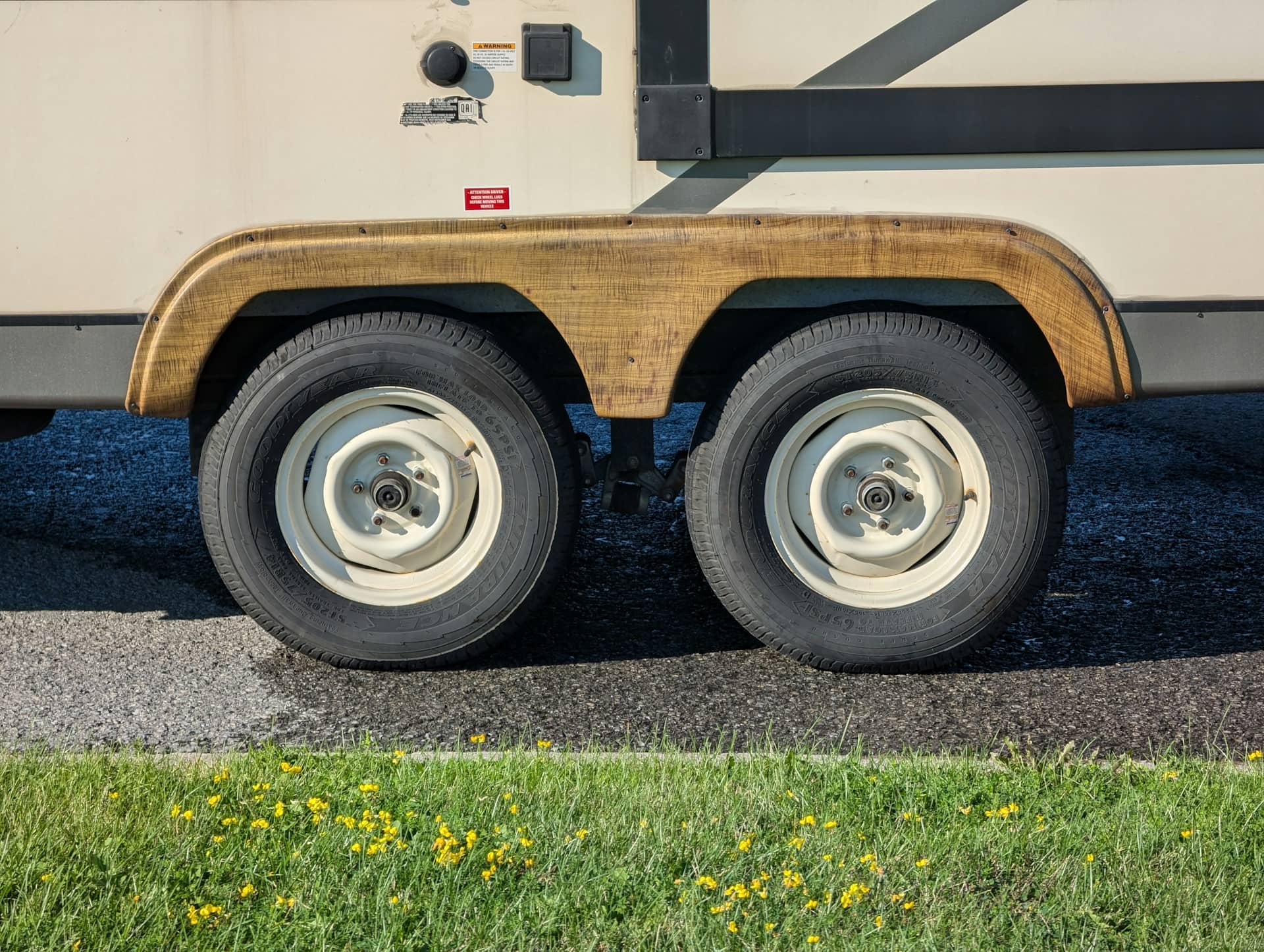
Get underneath if you can, or ask for clear video of the entire undercarriage. Surface rust on the frame of a used Canadian vehicle is normal. What you're looking for is deep rust, structural rust at weld points, or rust that's eating through the steel.
Check the wheel wells, the battery box, and the area around the hitch on trailers. Canadian roads and salt exposure accelerate this. A rig that spent winters in storage will look different from one that sat outside in Ontario for ten years.
5. Water stains on the ceiling and walls
Look up. Look at the corners. Look along the edges where walls meet the ceiling. Water stains are a permanent record of where water has been. They don't always mean there's an active leak right now, but they tell you water has gotten in, and you need to know how much and how long ago.
Bring a flashlight and check the upper corners of every room carefully. A lot of sellers bank on buyers not looking up.
6. Slide-out seals and operation
Run every slide in and out while watching and listening. Smooth and quiet is good. Grinding, hesitation, or uneven movement is worth noting. Then check the rubber seals all the way around the slide-out opening, inside and out. Cracked or compressed seals are the main reason slide-outs leak.
Also check the floor inside the slide room itself. It's one of the most common places to find soft spots.
7. Tire age, not just tread
This catches a lot of buyers off guard. RV tires can look fine and still be dangerous. The rubber compounds degrade with time and UV exposure regardless of how much tread is left. Most manufacturers recommend replacing RV tires every 5 to 7 years.
The manufacture date is moulded into the sidewall as a 4-digit DOT code. The last four digits give you the week and year. Code 2318 means week 23 of 2018. If you're looking at tires from 2018 or earlier, plan to replace them and factor that into your offer.
 The DOT date code tells you exactly how old the tire is — check all of them, not just one
8. Roof vents, windows, and exterior seals
Check every vent cover for cracks — UV breaks them down over time and a cracked vent cover is an open invitation for water. Look at the caulking around every window from the outside. It should be continuous, flexible, and firmly adhered. Any gaps, cracks, or areas where it's pulling away need attention before the next rain.
9. Appliances — all of them, actually running
Test the fridge on both propane and 120V if it's a three-way unit. Run the stove burners. Turn on the furnace. Run the AC. Test the water heater. Don't accept "it works, I just don't have it hooked up right now" from any seller. If they can't demonstrate it running, treat it as non-functional and price accordingly.
A non-working fridge alone can be a $1,500 to $3,000 replacement. Sellers sometimes list without disclosing this. It's worth asking directly about every appliance before you even show up.
10. What the seller tells you and what they don't
Ask directly: Has it ever had water damage? Has it been in an accident? Has it always been stored outside? What work has been done in the last two years? A seller who answers these confidently and specifically is different from one who gets vague or changes the subject.
Service records matter. A well-maintained rig with paperwork to back it up is worth more than the same rig without it. If there are no records at all on a ten-year-old motorhome, that's information worth factoring into your offer.
Rather have a certified technician do this for you?
That's exactly what RigReport is for. Starting at $159 CAD, you get a professional assessment before you commit to anything.
View Inspection PackagesNone of this requires special equipment. It requires time, a flashlight, and the willingness to look at the parts of an RV that aren't being shown off. Sellers who have nothing to hide will welcome a thorough look. The ones who rush you or limit access are usually doing it for a reason.
Ryan Bergeron is a Red Seal certified RV technician and founder of RigReport, Canada's only virtual RV inspection service. RigReport is a service of Fall River RV Repairs LTD.